
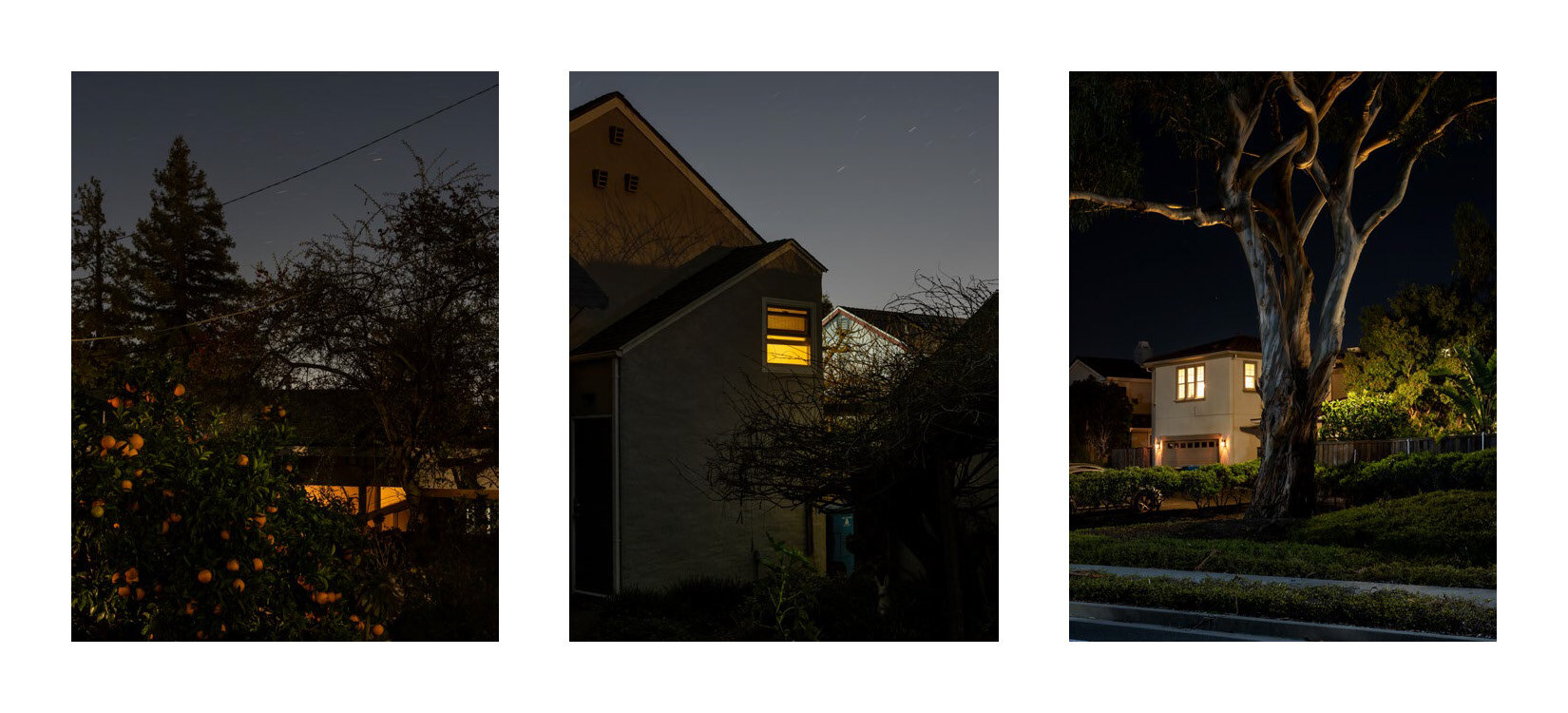
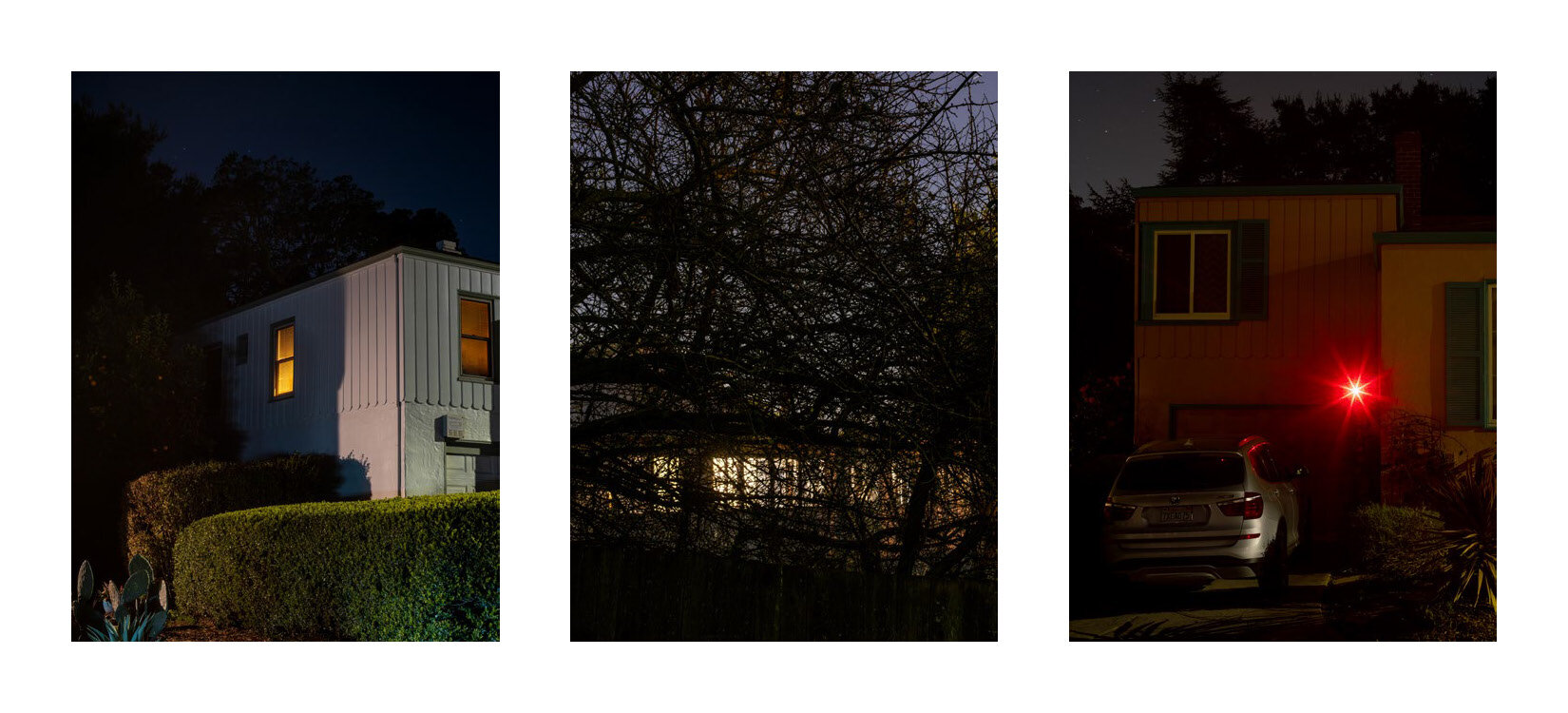
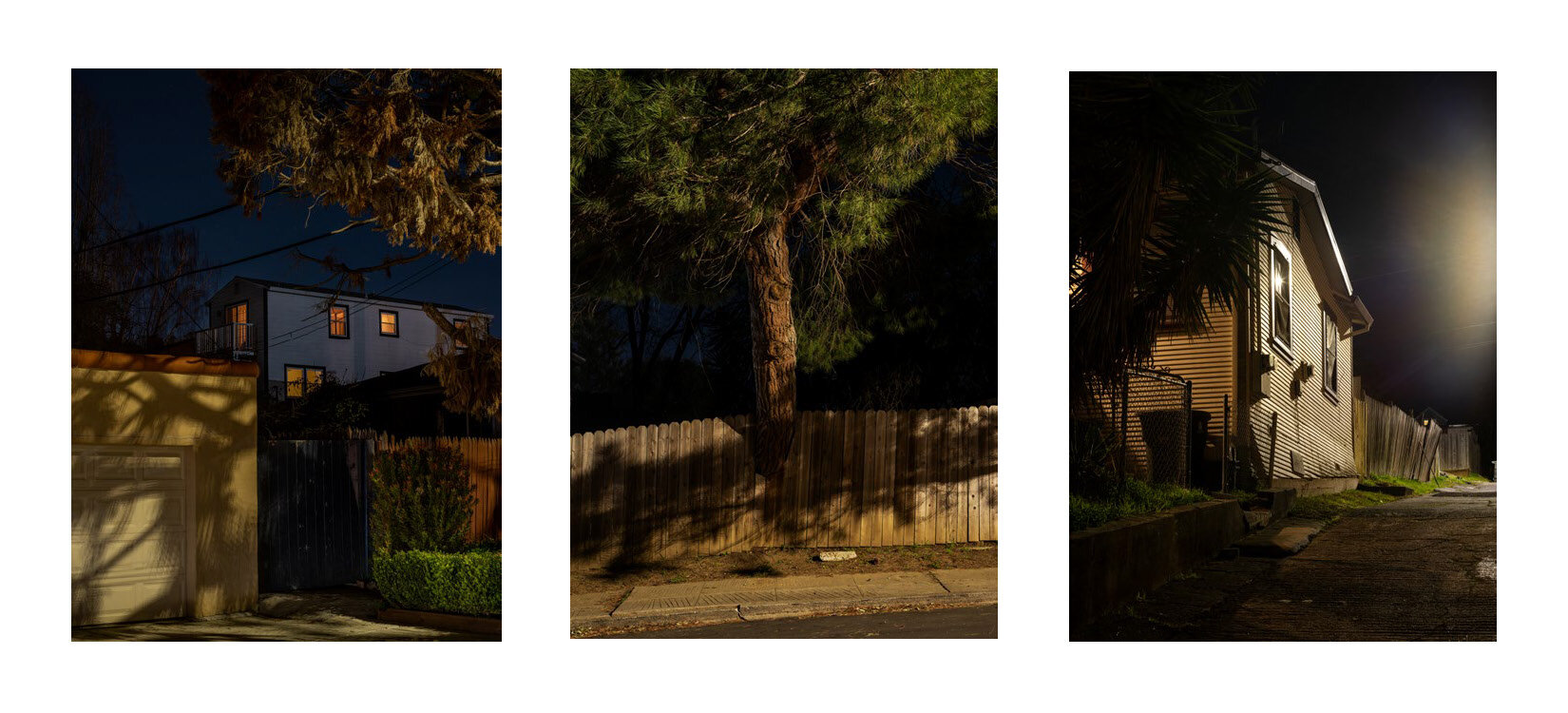
Soon after moving to the city of Vallejo in California in 2016, I was invited to join a web site called Next Door, which promises to facilitate neighborly connections. The Crime and Safety section of the site presents an abundance of warnings about ‘suspicious’ people lurking on the streets. Pixelated images captured with consumer surveillance cameras are linked to the warnings, which describe details such as the length of a woman’s skirt, the way a person walks, the color of a person’s skin. The posts seemed to provide a reason for people feel afraid – afraid of the unknown other, afraid of the perceived dangers of the street, afraid of what might be going on outside. I felt I was watching along as stereotypes and prejudices proliferated to help tech companies earn money.
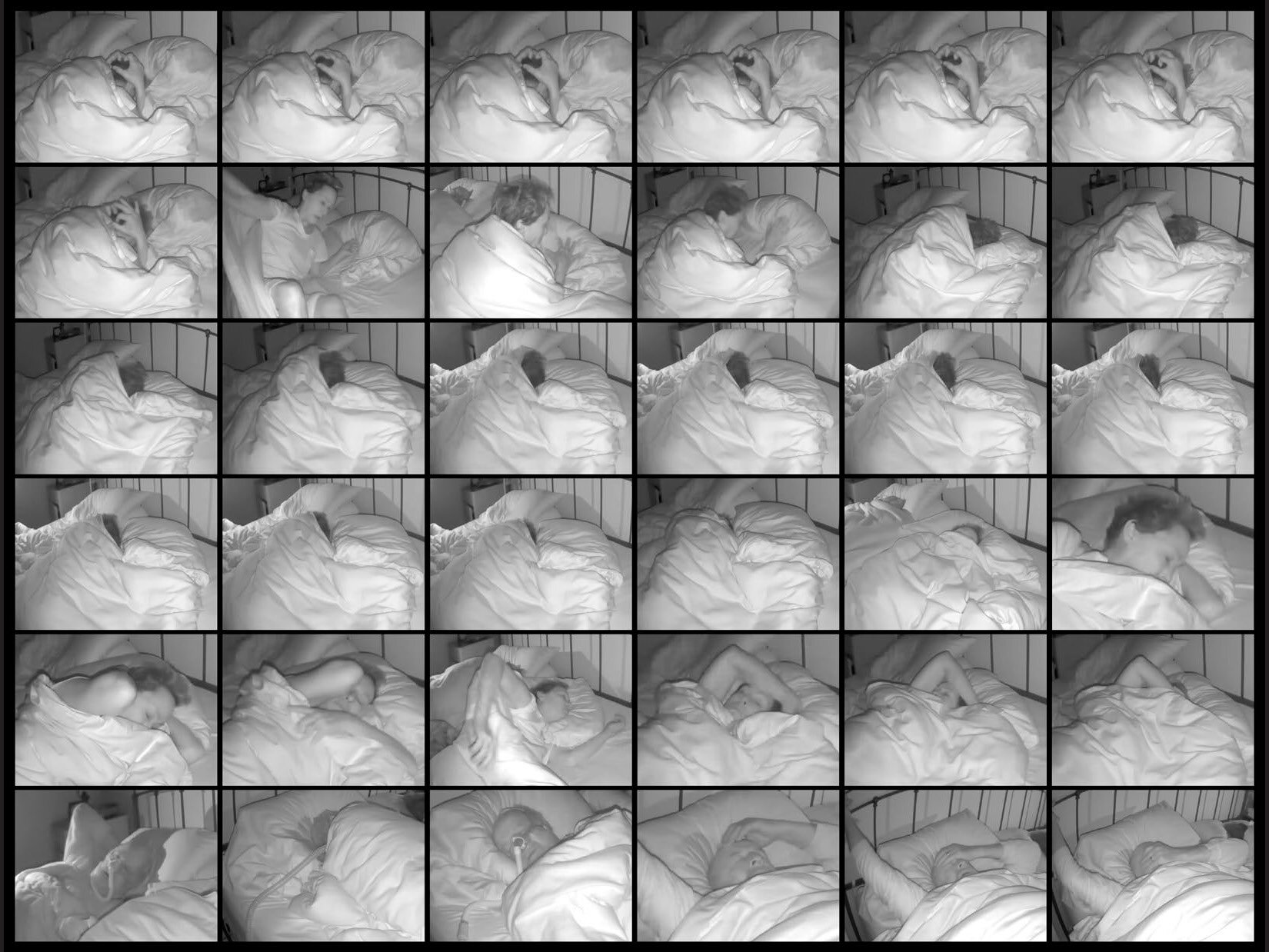
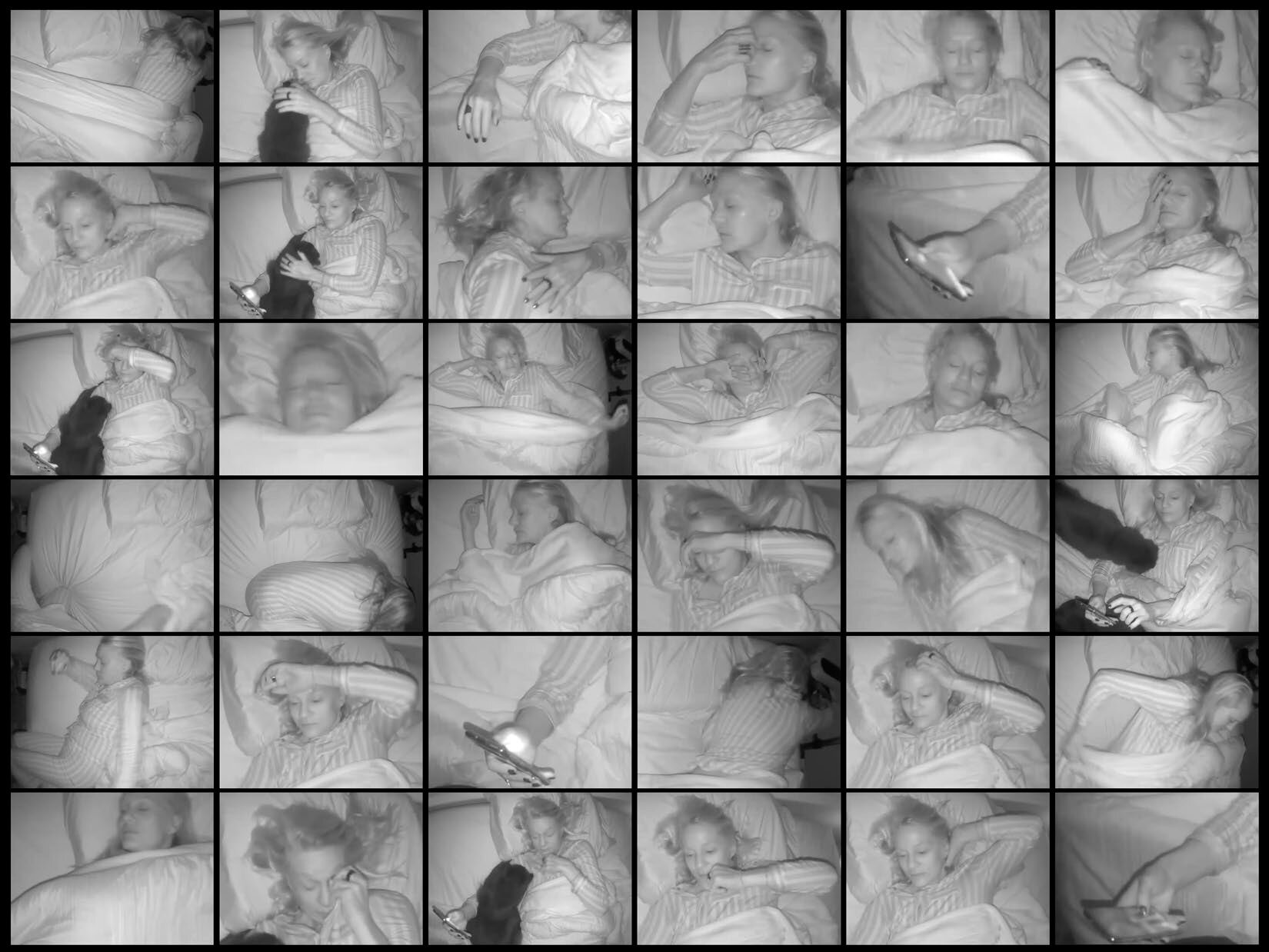
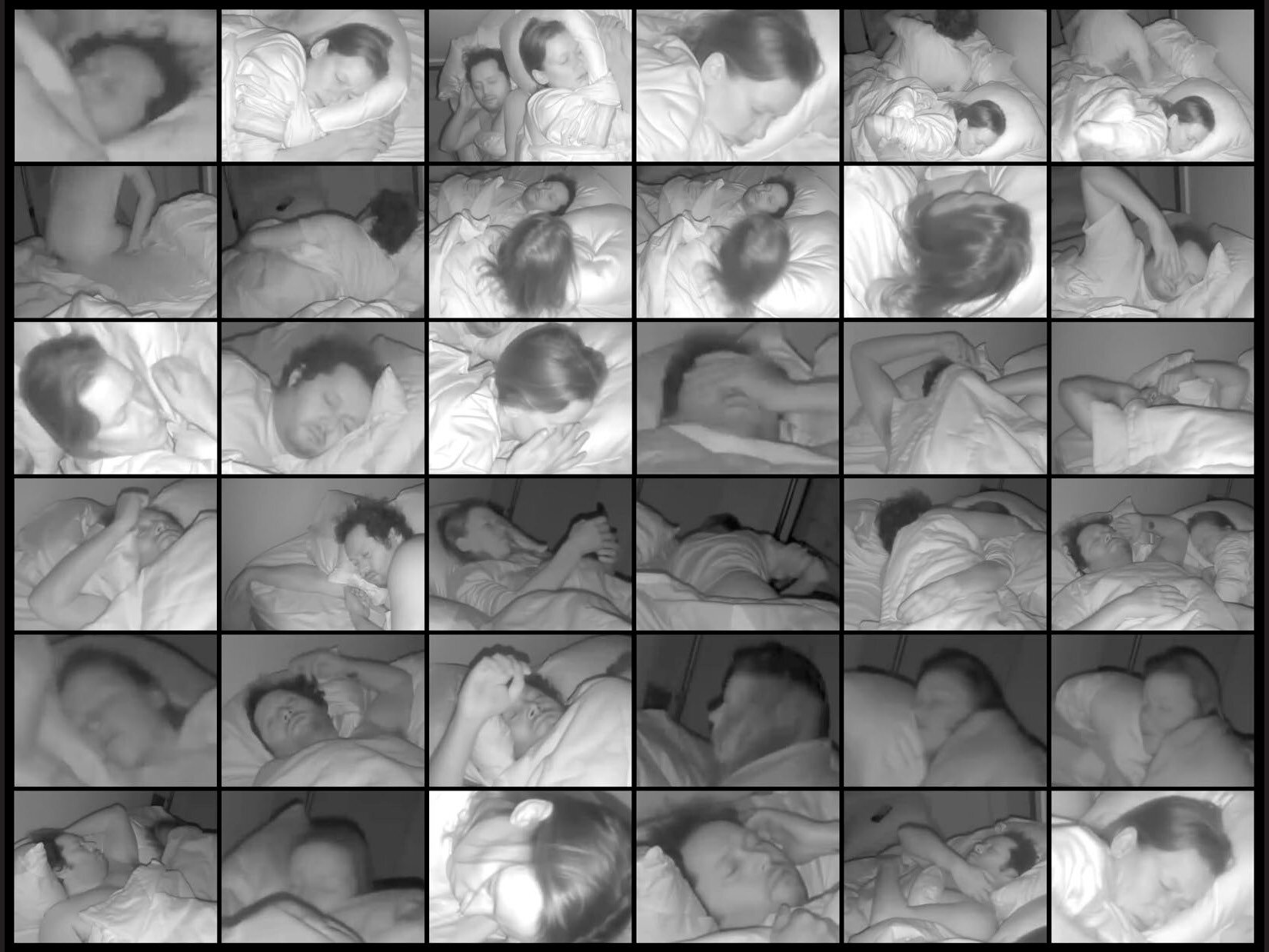
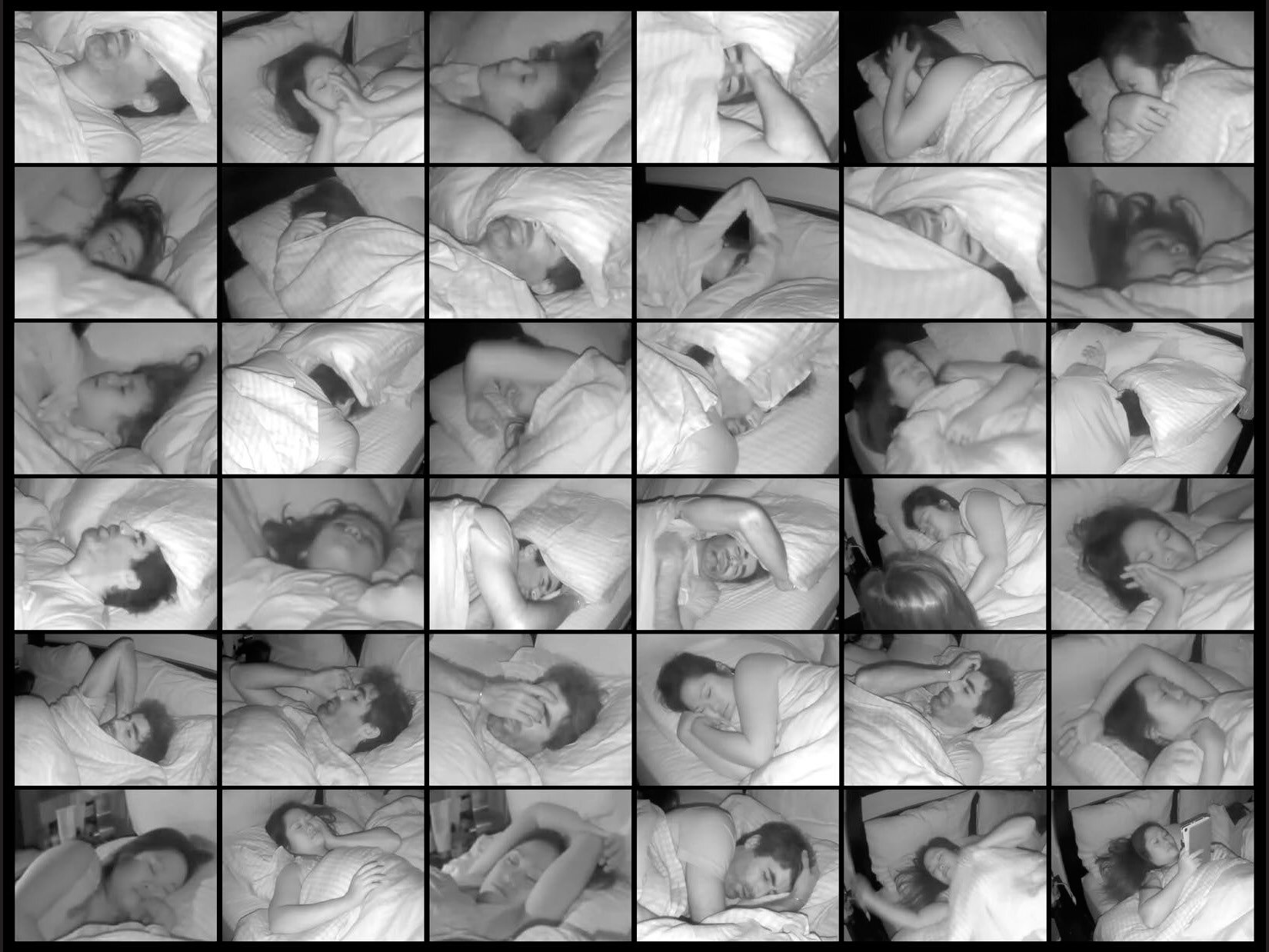
In response, I began experimenting with ways to use surveillance cameras to counter the role they play in the market of consumer capitalism. For the Sleeper series, I installed surveillance cameras over my neighbors’ beds and activated them at bedtime. I wanted to make the cameras do the opposite of what we are conditioned to with them, so I turned them inward on our most intimate space, the bedroom.
The Sleeper grids were each collected over the span of one night’s sleep. The color photos presented alongside them were made after dark with my camera on a tripod while walking alone in my neighborhood. I was exposing myself to the perceived dangers of the Next Door posts while also becoming one of the dangerous people.